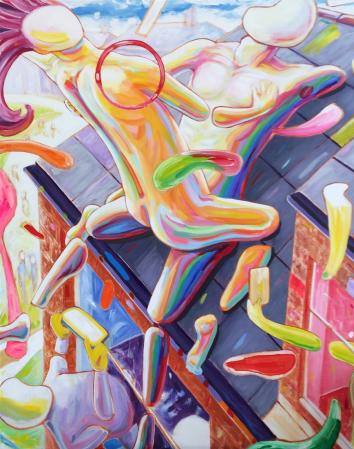
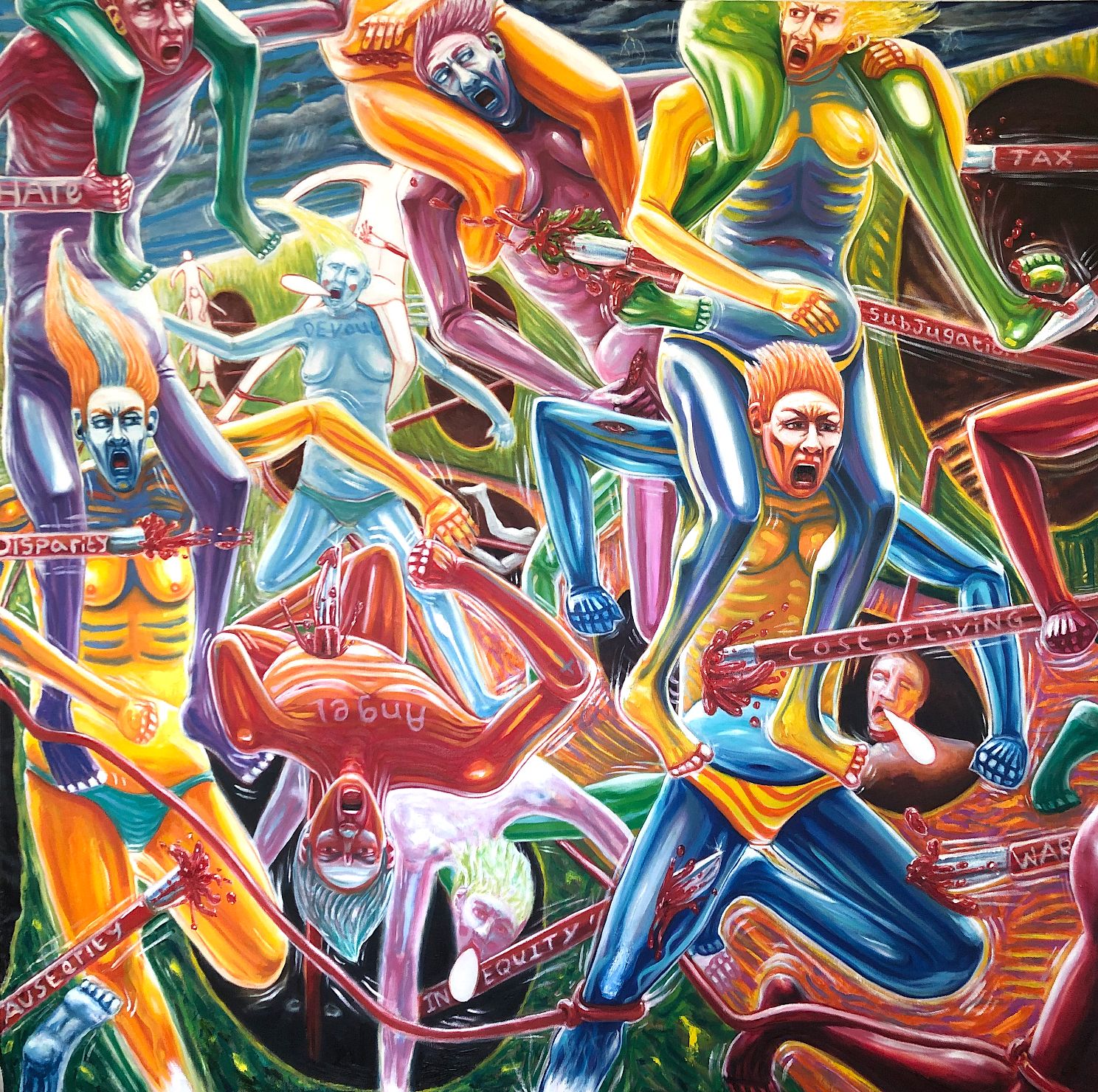
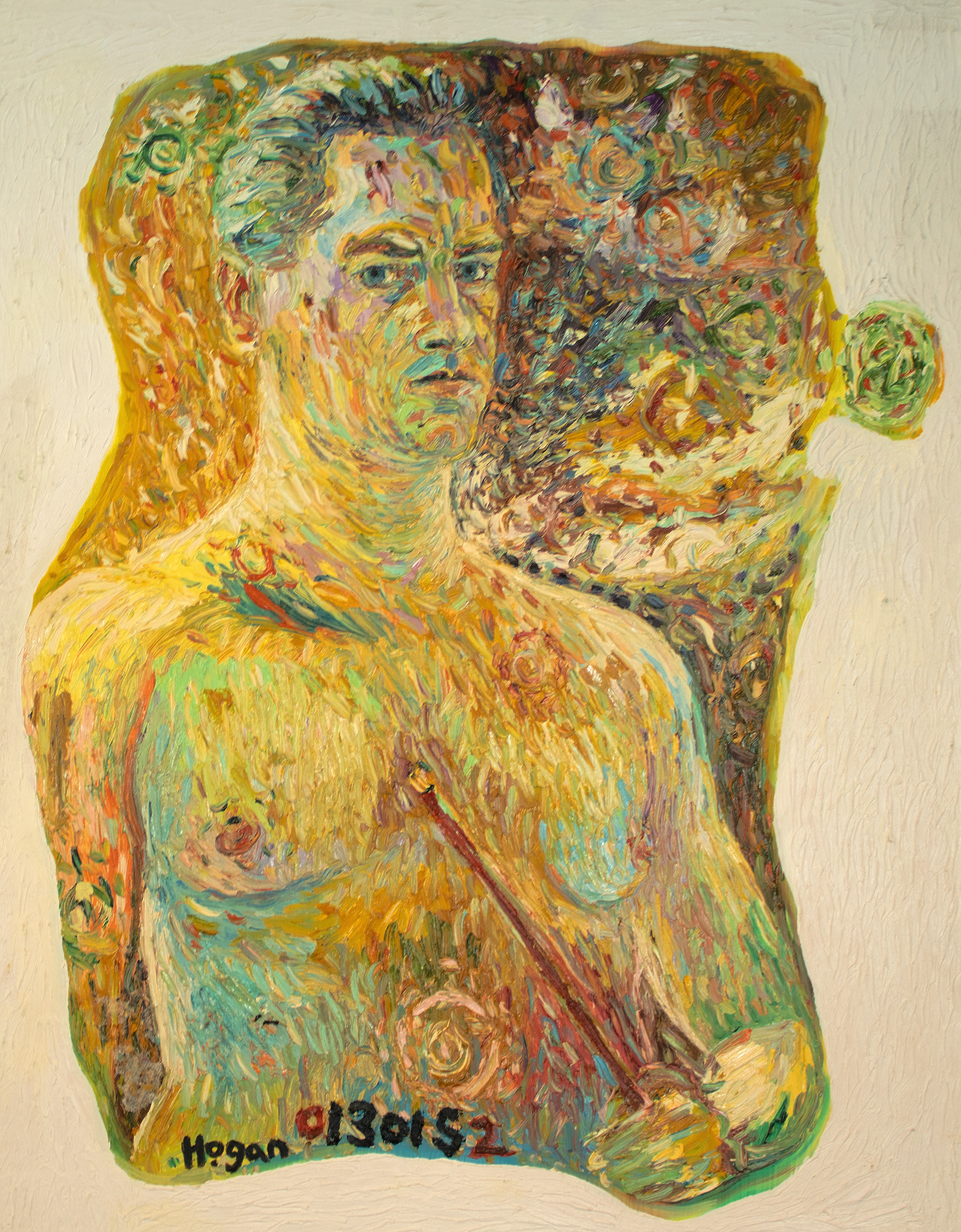
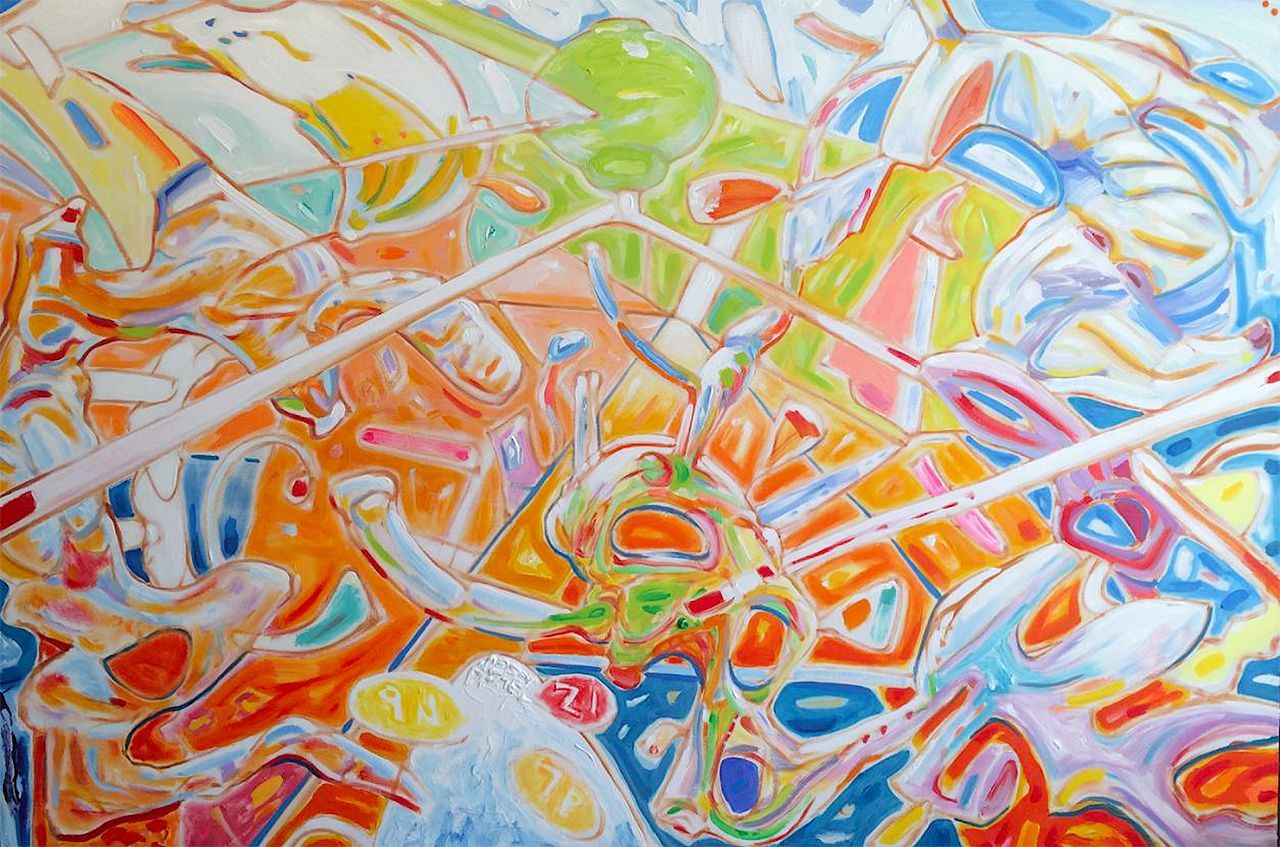
The Semiotic Trojan Horse, the narrative into alter modernism.
The illustration/fine art dichotomy
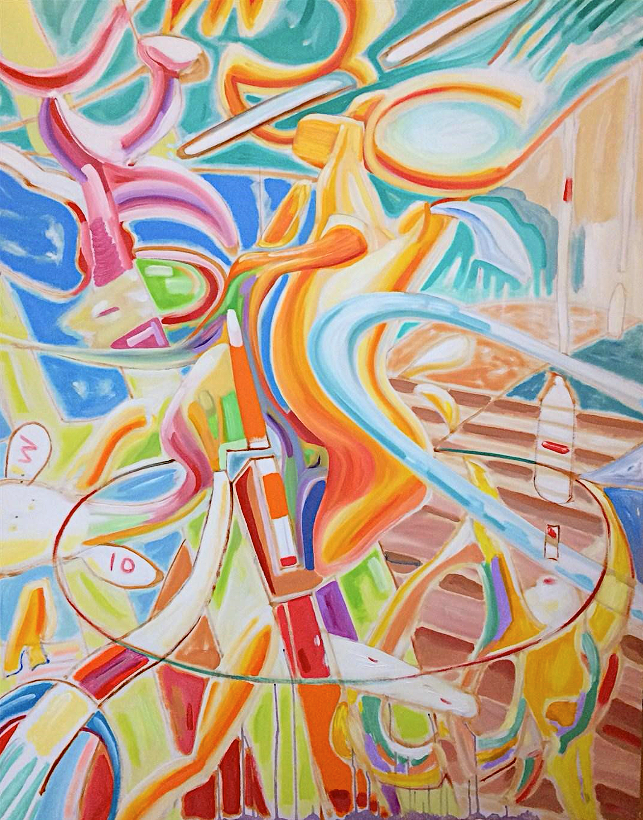
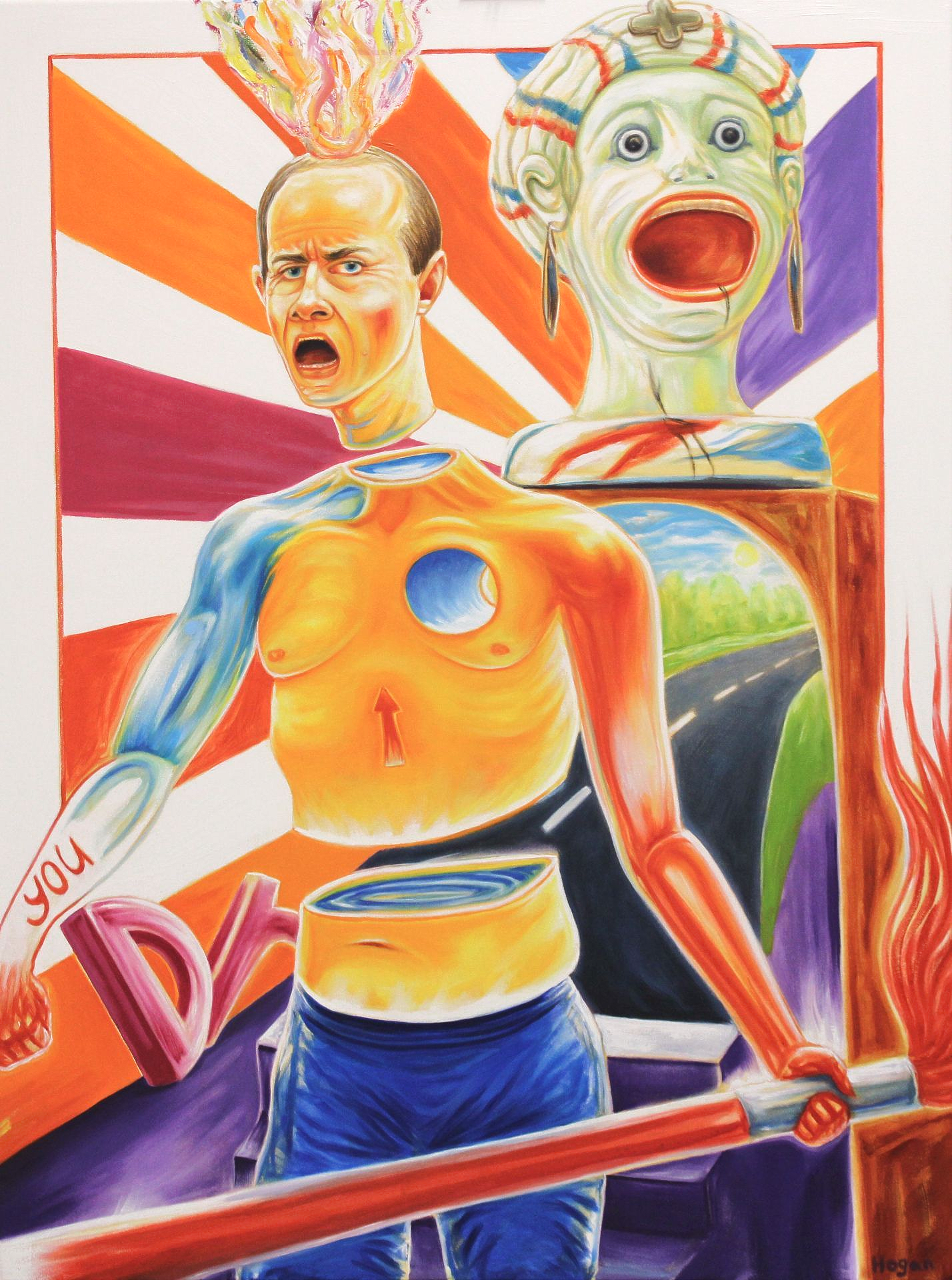
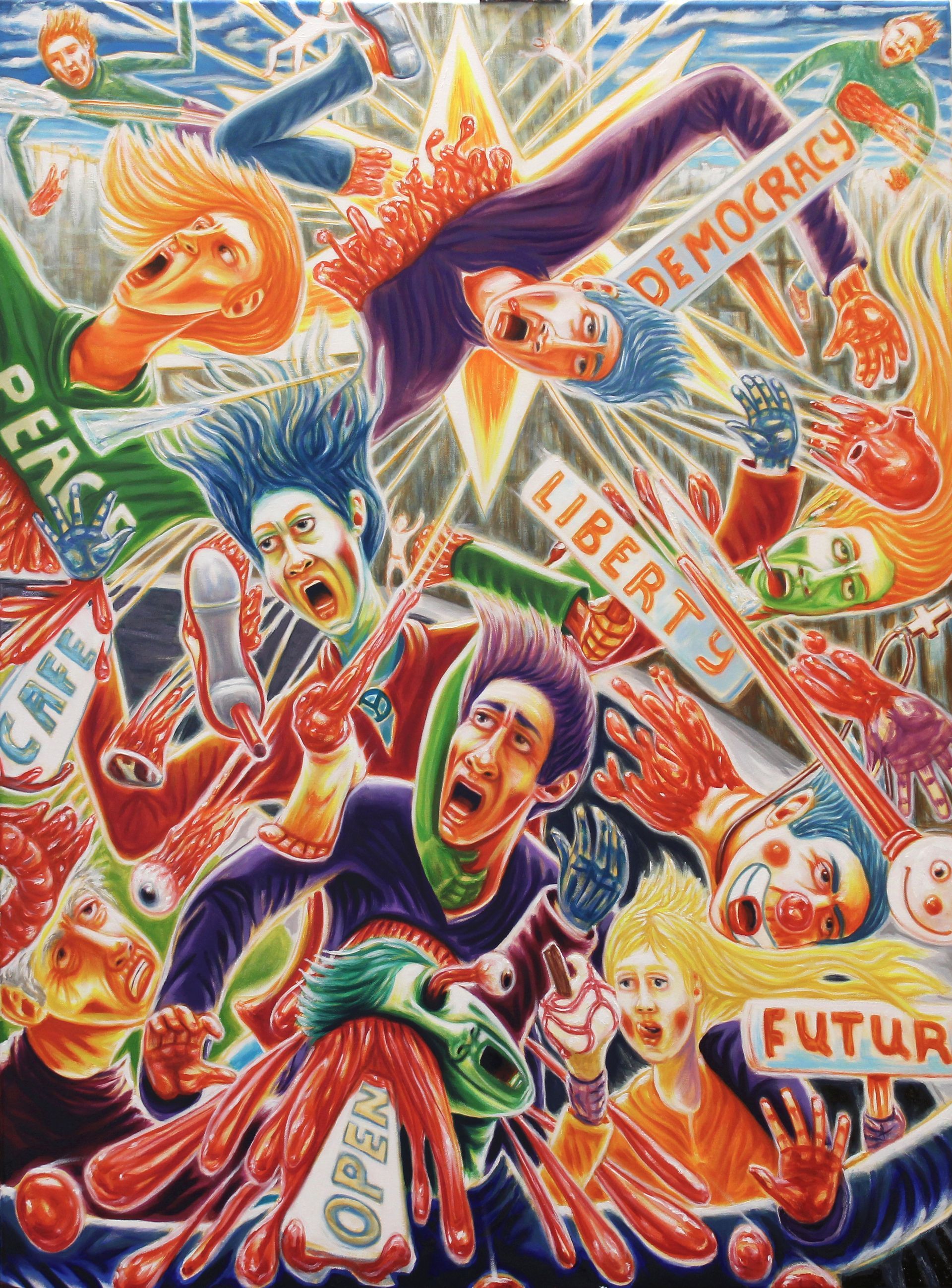
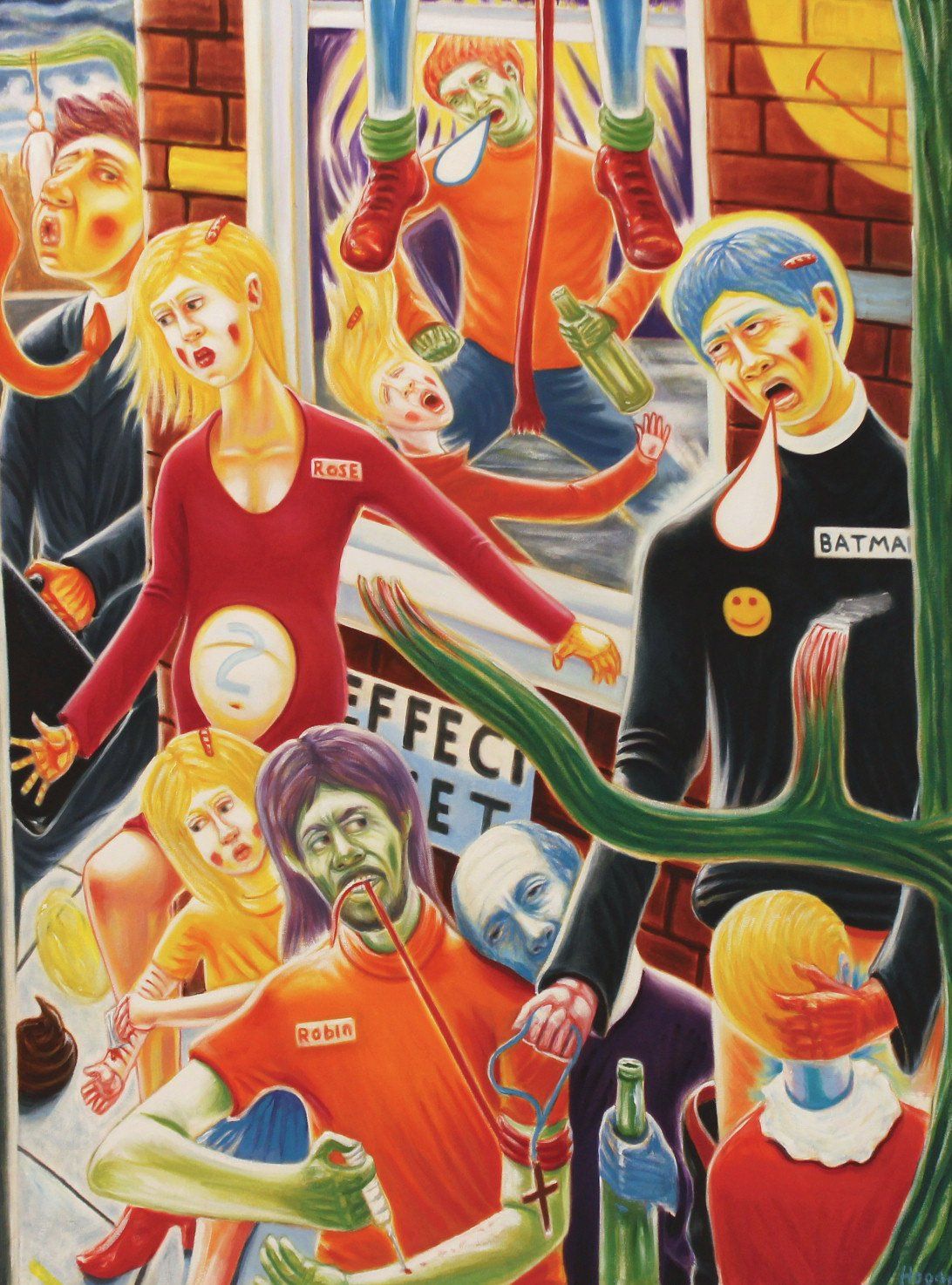
Decoding the Perma crisis: Semiotics, Alter modernity, and the Relational Power of Painting as Satire; for decades, traditional art history maintained an elitist, binary split between high fine art painting and the low cultural currency of cartooning, caricature, and editorial illustration. Painting traditionally retreated into the isolated white cube of the gallery, while satirical illustration was relegated to the disposable, ink-stained pages of mass media. However, looking at the contemporary landscape through the lens of semiotics; the study of signs and codes, reveals that this boundary is not just porous; it is entirely artificial. By deploying the visual shorthand of cartoon aesthetics within the materiality of contemporary painting, we can build a profound bridge between immediate graphic readability and rigorous critical theory. This intersection is not merely an aesthetic choice; it is a vital strategy for navigating our current state of global perma crisis.
The Semiotic Trojan Horse: Mass Media Codes on Canvas; to understand how cartoon aesthetics transcend illustration and function as fine art, we must unpack their semiotic mechanics. Every sign operates on two levels: the signifier (the physical line, colour, or shape) and the signified (the mental concept or socio-political reality it evokes). Commercial illustration and cartooning can be observed as semiotic efficiency. Because they operate within tight spatial limits, they rely on a universally recognised, highly codified visual shorthand. Exaggerated physical proportions, distorted features, and flattened planes act as direct signifiers of power, greed, vulnerability, or systemic decay. When these exact codes are extracted from disposable mass media and translated onto a large-scale painted canvas, their relational trajectory changes: Linear versus open coding; In standard editorial illustration, the semiotic sign is linear, it points directly to an accompanying text or a predictable headline to clarify a single message. On a canvas, these signs are liberated from the text. They clash against one another in an open-ended, non-linear dialogue, forcing the viewer to actively participate in decoding the composition. The Materiality of the Frame; translating flat, graphic vernacular into the tactile, layered medium of contemporary painting forces an intentional friction. The viewer is met with a stylistic language that feels inherently accessible, yet its institutional lens demands the deep contemplation typically reserved for classical fine art.
The Alter modern / Postmodern disjuncture; This semiotic collision is best understood by moving past the exhausted frameworks of postmodern relativism. Postmodernism often left art stranded in ironical detachment, self-referential loops, and Western-centric cynicism. Instead, the synthesis of satirical cartoon aesthetics and fine art painting champions an alter modern direction. Alter modernity is inherently creolised, archipelagic, and global. It rejects the elite gatekeeping of the past and operates with a moral compass driven by humanist principles of equality and equity. Enduring the Perma crisis through relational Satire; we live in a world defined by a perma crisis, an extended, continuous period of structural instability, multi-societal inequalities, and profoundly dysfunctional global politics. When reality itself becomes absurd and grotesque, traditional realism often fails to adequately capture the weight of our collective anxiety. This is where painting as a relational satire fulfils its true purpose. Ultimately, semiotics proves that cartoon aesthetics and fine art painting are not enemies. They are two points on the same spectrum of human communication. By utilising the immediate, punchy sign-systems of the cartoon, contemporary artists are not dumbing down fine art. They are weaponising it. They prove that a painting doesn’t need to look like an Old Master to carry the weight of the world; sometimes, the most profound truths are hidden inside a caricature. The cartoon aesthetic within fine art functions as a vital, cathartic conduit. By condensing complex, oppressive institutional structures into absurd, readable, and parodic signs, the artwork strips these systems of their untouchable aura. It creates an inclusive, shared space within the gallery, an interpretivist arena where audiences can collectively confront, decode, and laugh at the forces of instability. Satire becomes an act of psychological survival, a shared strategy for enduring the contemporary world.
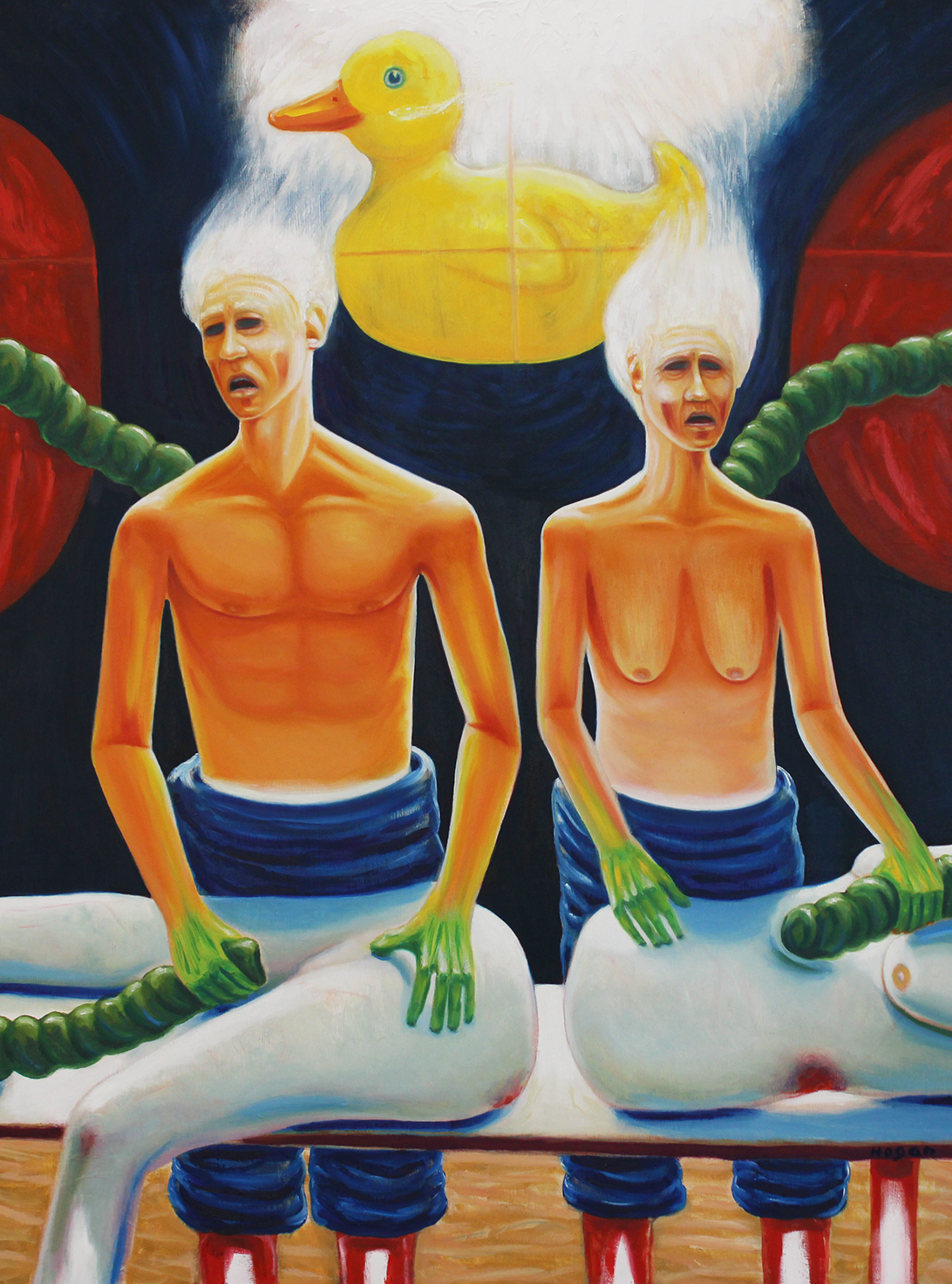
Illustration is another critique levelled at my work. I therefore posit a question ; Is my work illustration or fine art painting ?; my work is not illustration here is my reasoning; An illustration is an image created to explain, interpret, or visually support a text, story, concept, or message. Purpose; it has a specific function—such as accompanying a story in a book, explaining a scientific process, decorating a poster, or branding a product. Communication; it tells a story or clarifies an idea rather than existing purely as a self-contained fine art piece. Medium; it can be drawn, painted, collaged, digitally rendered, or created in 3D, and used in print or digital media. My portfolio and academic framework is fundamentally categorised as contemporary fine art painting and drawing that operates as social and political satire, rather than traditional commercial illustration. While satirical art inherently shares a border with editorial and political illustration, your practice shifts the work firmly into the realm of fine art and critical theory. The Overlap; why It feels like illustration; satire relies heavily on semiotic codification, using recognisable symbols, narrative themes, and a communicative aesthetic to deliver a critique. Because illustration is defined by its duty to transmit a clear message or story, any artwork with a cartoon, comedic, or satirical tone shares a visual language with illustrative styles like editorial cartooning. My research and institutional exhibitions (such as my thesis; the justification for a relational satire within contemporary painting), my pieces function under distinct fine art principles; autonomy versus client demand; illustration is usually a service commissioned by a client to accompany text (like a magazine article or book). Conversely, my work is self-directed and practice-led. Relational and Cathartic Intent; my paintings act as an open-ended conduit for audiences to process structural societal dysfunction. This makes the artwork is an experiential and relational tool rather than a passive decorative or explanatory visual. Context of Display; my pieces are designed for public, institutional, and gallery contexts, and academic dialogues, rather than commercial print distribution. Ultimately, I am using the communicative, narrative toolset often found in illustration to expand the boundaries of what contemporary painting can achieve in a perma crisis world.
The fundamental reason my work is not illustration is that illustration functions as a secondary text designed to resolve communication, whereas fine art painting operates as a primary site of autonomous problem-making. While both practices can utilise a similar graphic vocabulary, they differ entirely in their ontology, their relationship to time, and their structural purpose. The defining characteristic of illustration is its teleological dependence on something outside of itself. It is explicitly tethered to an anchor, be it an article, a book chapter, a brand identity, or a client brief. My work carries no such burden. The canvas does not accompany a text; it is the text. The visual argument originates on the surface, develops through the material process of painting, and concludes within the frame. It does not require a secondary medium to justify its existence. A painted canvas demands physical presence. The scale of the work, the texture of the medium, the visible brushwork, and the spatial relationship between the viewer’s body and the object introduce an element of duration. The humour or satire is not a quick punchline; it is a prolonged, uncomfortable encounter with a physical artifact. Illustration Solves: An illustrator takes a complex, abstract concept and simplifies it. The goal is to eliminate misinterpretation so the viewer can immediately grasp the intended message. Painting Problematizes: My work does the exact opposite. It takes a familiar, legible graphic style and uses it to complicate interpretation. By layering contradictory signs, historical art references, and open-ended narratives onto a single surface, the painting refuses to offer a neat resolution. It leaves the viewer with tension, paradox, and ambiguity.The network of Production and agency; The institutional framework surrounding the creation of the work dictates its ultimate categorisation. The Commercial Web; illustrators operate within a commercial network of production. They navigate editorial feedback, layout constraints, reproductive media limitations, and client demands. The artist's agency is negotiated against a commercial goal. The critical trajectory; my practice answers strictly to the historical and critical trajectory of fine art. The work is practice-led research, responding to the history of painting, institutional critiques, and philosophical inquiries. The canvas is not a vehicle for a commercial product; it is a standalone contribution to visual culture.
The moment a satirical image transitions from a small-scale drawing to a large format canvas, its psychological impact on the viewer fundamentally changes. This shift can be understood through phenomenology, the study of how we physically experience the world around us.The Power Dynamics of Scale; a small drawing invites intimacy and a sense of control. The viewer stands over the image, looking down at it. A large canvas reverses this relationship. The painting dominates the viewer's field of vision, forcing them to physically look up or move their entire body to take it in. The satire is no longer a contained joke; it becomes an environment that surrounds the viewer. The bodily encounter: In a large painting, cartoonish figures and distorted faces are scaled up to match or exceed human proportions. This creates an uncanny physical confrontation. The viewer is forced to stand face-to-face with the absurd, transforming a detached intellectual critique into an intense, visceral experience. Deceleration and detail; a large canvas slows down the act of looking. On a printed page or screen, a cartoon is consumed almost instantly. On a large canvas, the viewer's eyes must travel across expansive fields of colour, varied paint textures, and complex compositions. This slower pace introduces a sense of gravity, demanding that the viewer spend time with the image rather than just consuming a quick punchline.
Finally, the lineage of the grotesque: From Goya to Contemporary Canvas; modern illustration traces its roots through print media, advertising, and comic books, my practice connects to an entirely different artistic lineage; the history of the painted grotesque. Artists like Francisco Goya and Honoré Daumier used exaggeration, caricature, and the absurd not as a secondary decorative service, but as a primary tool for fine art critique. Goya’s Black Paintings: Goya did not use monstrous, distorted figures to illustrate a specific book or fable. Instead, he painted them directly onto the walls of his house (Quinta del Sordo). Pieces like Saturn Devouring his Son use the grotesque to express absolute horror at human nature and political collapse. This is fine art operating at its most autonomous, using distortion to capture a psychological and societal reality that traditional realism cannot touch. Daumier’s Painterly Satire; Although widely known for his lithographs, Daumier’s oil paintings (such as The Third-Class Carriage or his Don Quixote series) show how painterly texture elevates caricature. He used thick, expressive brushwork to give his satirical figures a heavy, physical presence. By moving satire onto canvas, Daumier forced the art world of his time to treat the comedic and the critical with the same serious attention as historical painting. The grotesque as fine art strategy; this lineage proves that distortion is not a modern invention of comic books or illustration. It is a long-standing fine art strategy designed to strip away the polite surface of polite society, exposing the raw, dysfunctional truths underneath.